
Juicing for weight loss is gaining traction, with numerous PDF recipes available online. These resources offer convenient access to blends designed to support health goals.
Many PDF guides detail how cucumber juice aids weight management, offering a refreshing and simple approach to dietary changes.
Exploring digital recipe collections provides diverse options, from green juice powerhouses to citrus fat burners, all easily downloadable and printable.
What is Juicing?
Juicing is the process of extracting juice from fresh fruits and vegetables, separating it from the solid pulp. Unlike blending, which retains the fiber, juicing focuses on delivering concentrated nutrients in liquid form. Many individuals explore juicing recipes for weight loss, often found conveniently compiled in PDF format.
These PDF guides frequently showcase recipes emphasizing ingredients like cucumber, known for its hydrating properties and low calorie count. The appeal lies in the ease of nutrient absorption and the potential for quick, digestible energy. Discovering a variety of juicing recipes in PDF collections allows for experimentation and personalization, catering to individual taste preferences and dietary needs.
Benefits of Juicing for Weight Loss
Juicing, particularly when following weight loss recipes often available as PDF downloads, offers several potential benefits. Concentrated nutrients from fruits and vegetables can provide a quick energy boost, supporting an active lifestyle. Many PDF guides highlight recipes featuring ingredients like grapefruit, believed to aid metabolism.
The ease of digestion allows the body to absorb vitamins and minerals efficiently. Accessing juicing recipes in PDF format streamlines meal planning and preparation. While not a magic bullet, incorporating juice into a balanced diet, as detailed in these resources, can contribute to weight management goals.
Understanding the Principles of Weight Loss Juices
PDF juicing recipes emphasize nutrient density, but lack fiber. Understanding calorie deficits and ingredient impacts, as outlined in these guides, is crucial for success.
Calorie Deficit and Juicing
Juicing recipes in PDF format often highlight low-calorie options, supporting weight loss through a calorie deficit. However, relying solely on juice isn’t sustainable.
Effective weight management requires consuming fewer calories than expended, and PDF guides demonstrate how juices can contribute to this, not be the solution.
Many downloadable recipes focus on maximizing nutrient intake while minimizing caloric density. It’s vital to view juicing as a supplement to a balanced diet, not a replacement for whole foods, as detailed in comprehensive PDF collections.
Remember, a PDF can offer ideas, but individual caloric needs vary, and a holistic approach is key.
Nutrient Density in Juices
Juicing recipes found in PDF format frequently emphasize maximizing nutrient intake from fruits and vegetables. This concentrated dose of vitamins and minerals supports overall health during weight loss.
PDF guides often detail how specific juice combinations, like those featuring leafy greens and berries, deliver high levels of antioxidants and essential nutrients.
However, it’s crucial to remember that nutrient density doesn’t automatically equate to weight loss; it’s a beneficial component of a broader healthy lifestyle. Downloadable recipe collections showcase options to boost nutritional value.
Carefully selected PDF recipes can be a powerful tool for optimizing your diet.
The Role of Fiber (and its absence in most juices)
Juicing recipes in PDF format often don’t highlight a critical aspect of weight loss: fiber. The juicing process typically removes the pulp, and therefore, much of the beneficial fiber content.
PDF guides rarely emphasize that fiber promotes satiety, aiding in feeling fuller for longer and reducing overall calorie intake. This absence can be a drawback when relying solely on juices.
While downloadable recipe collections offer nutritional benefits, it’s vital to supplement with fiber-rich foods to maintain digestive health and support weight management goals.
Consider incorporating whole fruits and vegetables alongside your PDF-sourced juice recipes.
Top Juicing Recipes for Weight Loss
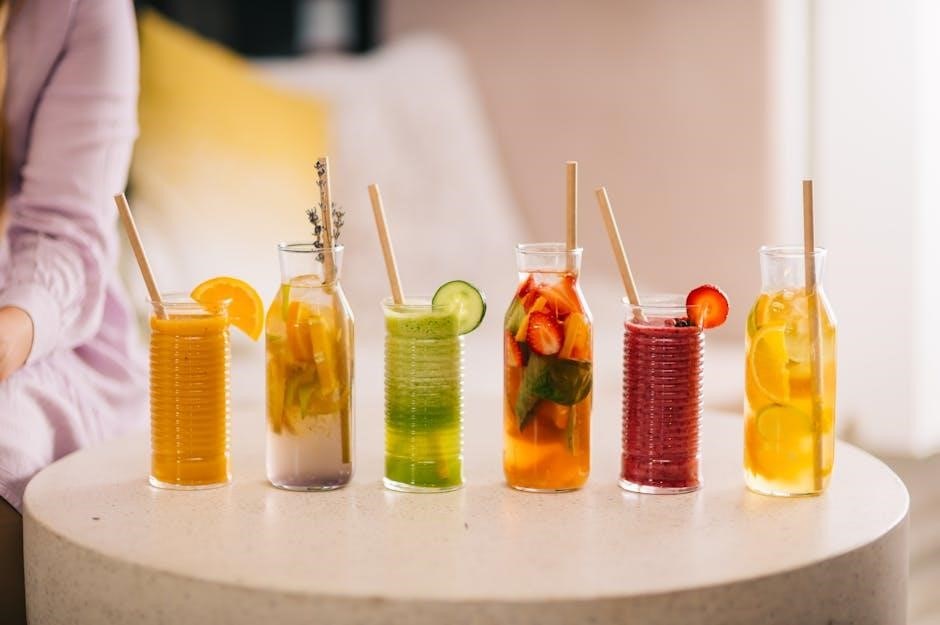
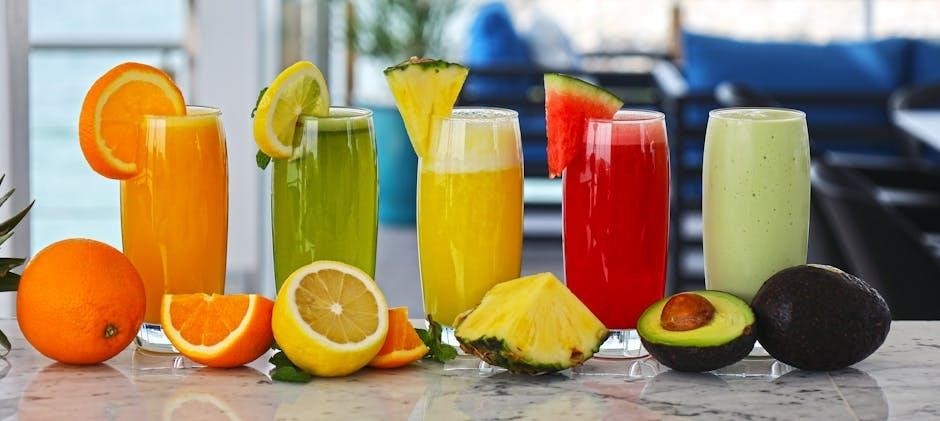
PDF recipe collections showcase diverse blends, including green juice, beet & berry boosts, and citrus fat burners, for effective weight management.
Downloadable guides provide easy access to flavorful options like cucumber & mint refreshers and carrot & apple metabolism boosters.
Green Juice Powerhouse
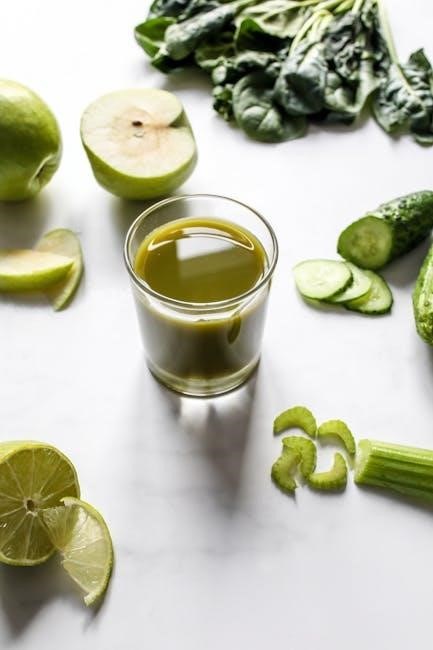
Green juices are foundational in many weight loss PDF guides, celebrated for their nutrient density and detoxifying properties. A popular recipe, frequently found in downloadable collections, combines kale and spinach for a vitamin-rich base.
Adding cucumber provides hydration and a mild flavor, while a touch of apple introduces natural sweetness. A squeeze of lemon brightens the taste and aids digestion. These PDF recipes often emphasize the importance of fresh, organic ingredients for optimal results.
This powerhouse blend supports metabolism and provides sustained energy, making it a staple in many juicing plans detailed within digital recipe books.
Recipe: Kale, Spinach, Cucumber, Apple, Lemon
This classic green juice recipe, widely available in weight loss PDF resources, is a nutritional powerhouse. Begin with 2 cups of kale and 1 cup of spinach, providing essential vitamins and minerals. Add half a cucumber for hydration and a refreshing taste, often highlighted in digital recipe guides.
One medium apple introduces natural sweetness and fiber (though minimal in juice form). Finish with the juice of half a lemon to enhance flavor and aid digestion. Many PDFs suggest adjusting quantities to taste.
This blend is a cornerstone of many juicing plans, easily found in downloadable collections.
Beet & Berry Boost
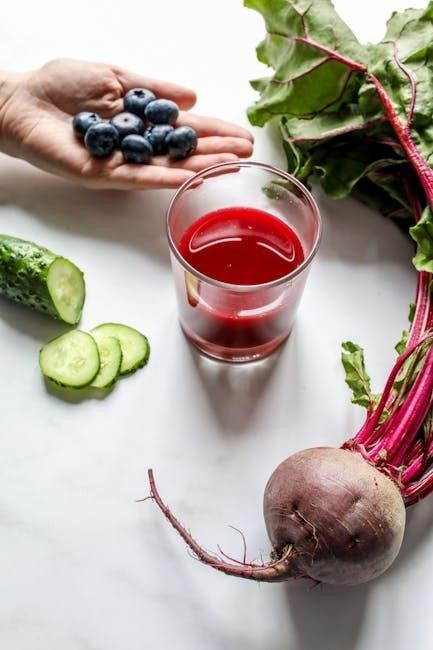
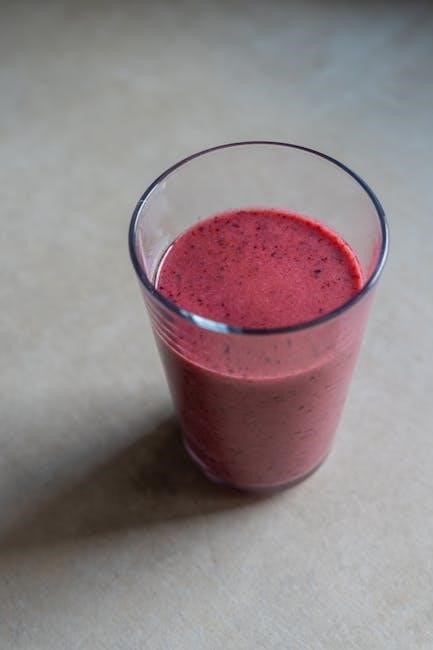
The Beet & Berry Boost, frequently featured in weight loss juicing PDFs, offers a vibrant and antioxidant-rich experience. Start with one medium-sized beetroot, known for its detoxifying properties, often emphasized in digital recipe collections. Combine this with one cup of mixed berries – strawberry and blueberry are excellent choices – providing natural sweetness and vital nutrients.
Add half an apple for additional flavor and a small piece of ginger (about 1 inch) to boost metabolism, as suggested in many PDF guides. This blend is a popular choice for those seeking a flavorful and effective juice.
Recipe: Beetroot, Berries (Strawberry, Blueberry), Apple, Ginger
This Beet & Berry Boost recipe, commonly found in weight loss juicing PDFs, is simple to prepare. Begin by thoroughly washing and chopping one medium beetroot, ensuring it’s appropriately sized for your juicer. Add one cup of mixed berries – approximately half a cup each of strawberry and blueberry – for a sweet and antioxidant-packed flavor.
Include half a green apple, cored, and a 1-inch piece of peeled ginger. Process all ingredients through your juicer, following the manufacturer’s instructions. Enjoy immediately for optimal nutrient retention, as detailed in many PDF recipe guides.
Citrus Fat Burner
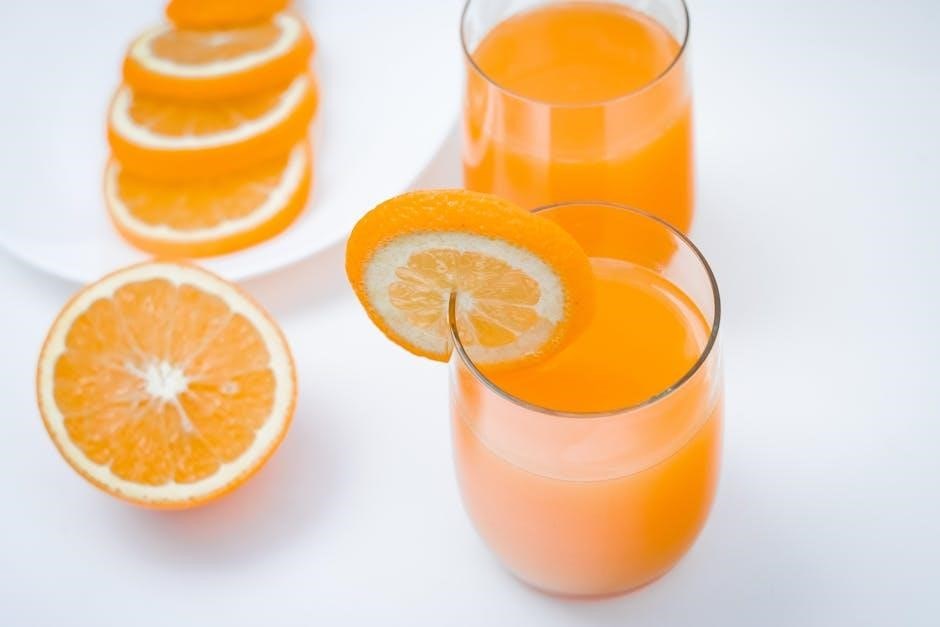
The Citrus Fat Burner juice, frequently featured in weight loss juicing PDFs, is celebrated for its metabolism-boosting properties. This vibrant blend typically calls for one large grapefruit, peeled, and one medium orange, also peeled. Supplement these with the juice of half a lemon, adding a zesty kick and aiding digestion.
A 1-inch piece of peeled ginger enhances the thermogenic effect, as highlighted in numerous PDF recipe collections. Process all ingredients through your juicer, ensuring a smooth consistency. Consume this juice in the morning to kickstart your metabolism.
Recipe: Grapefruit, Orange, Lemon, Ginger

This Citrus Fat Burner recipe, commonly found in juicing recipes for weight loss PDFs, is a potent metabolic booster. Begin with one medium-sized grapefruit, peeled, and one orange, ensuring all seeds are removed. Add the juice of half a fresh lemon for a tangy flavor and digestive support.
A crucial element, as emphasized in many PDF guides, is a 1-inch piece of ginger, peeled, to ignite thermogenesis. Juice all ingredients together until smooth. This yields approximately 12-16 ounces of juice. Enjoy immediately for optimal nutrient absorption and a refreshing start to your day.
Cucumber & Mint Refresher
This revitalizing recipe, frequently featured in juicing recipes for weight loss PDFs, offers a hydrating and low-calorie option. Start with one large cucumber, roughly chopped, and a generous handful – about 15-20 leaves – of fresh mint. Add the juice of half a lime for a zesty kick and enhanced detoxification.
For a touch of sweetness and added nutrients, include half of a green apple, cored. Many PDF guides recommend juicing all ingredients together until a smooth consistency is achieved, yielding around 10-14 ounces. This refreshing juice is best consumed immediately after preparation.
Recipe: Cucumber & Mint Refresher
Juicing recipes for weight loss PDFs consistently highlight this blend for its hydrating and metabolism-boosting properties. Begin with 1 large cucumber, peeled if desired, and roughly chopped. Combine this with a packed cup of fresh mint leaves, ensuring vibrant flavor. Add the juice of 1/2 lime, providing a tangy zest and aiding digestion.
Finally, incorporate 1/2 green apple, cored, for a subtle sweetness and fiber boost. Process all ingredients in a juicer until smooth. Yields approximately 12-16 ounces. Many PDFs suggest enjoying this immediately for optimal nutrient intake.
Carrot & Apple Metabolism Booster
Juicing recipes for weight loss PDFs frequently feature this vibrant blend, known for its ability to stimulate metabolism. Start with 6 medium-sized carrots, scrubbed and trimmed. Combine these with 1 medium apple, cored but skin-on for added nutrients. Enhance the flavor and metabolic effect with a 1-inch piece of fresh ginger, peeled.
A dash of cinnamon (about 1/4 teaspoon) adds warmth and may help regulate blood sugar. Process all ingredients in a juicer until a smooth consistency is achieved. This recipe typically yields around 10-14 ounces.
Recipe: Carrots, Apple, Ginger, Cinnamon
PDF juicing guides often highlight this metabolism-boosting recipe. Begin by preparing 6 medium carrots, ensuring they are thoroughly washed and trimmed. Add 1 medium apple, cored, retaining the skin for extra fiber and vitamins. Introduce a 1-inch piece of fresh ginger, peeled to release its potent flavor and thermogenic properties.
Finally, incorporate ¼ teaspoon of cinnamon, known for its blood sugar regulating benefits. Juice all ingredients using a juicer, yielding approximately 10-14 ounces of vibrant, flavorful juice. Enjoy immediately for optimal nutrient absorption.
Juicing Ingredients & Their Weight Loss Properties
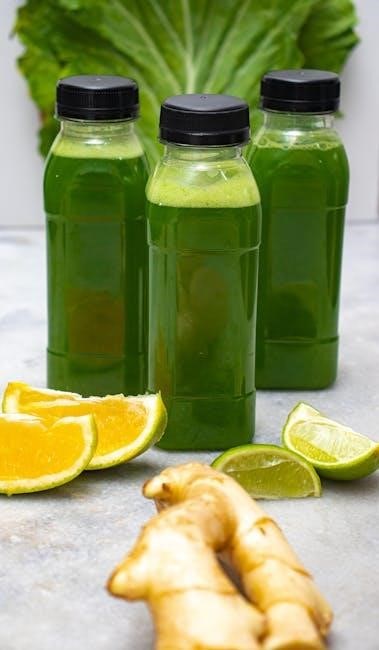
PDF recipe collections detail how ingredients like leafy greens, berries, and ginger support weight loss. These guides explain each ingredient’s unique benefits.
Carrots and cucumber are also frequently featured, offering hydration and essential nutrients for a healthy metabolism.
Leafy Greens: Kale, Spinach, Lettuce
PDF juicing recipe guides consistently highlight kale, spinach, and lettuce as foundational ingredients for weight loss. These greens are incredibly nutrient-dense, providing essential vitamins and minerals with minimal calories. Many PDFs emphasize kale’s high fiber content, aiding digestion and promoting fullness, even though juicing removes much of it.
Spinach is often included for its mild flavor and rich antioxidant profile, while lettuce, particularly romaine, adds volume and hydration. Recipe PDFs frequently combine these greens with fruits and other vegetables to balance the flavor and maximize nutritional benefits. They are a cornerstone of many green juice blends.
Fruits: Apples, Berries, Grapefruit
Juicing recipe PDFs frequently feature apples, berries, and grapefruit for their sweetness and health benefits. Apples provide natural sugars and fiber (though reduced in juice), contributing to a satisfying taste. Berries – strawberries, blueberries – are packed with antioxidants, supporting overall wellness during weight loss. Many PDF guides suggest combining berries with greens to enhance flavor.
Grapefruit is often touted for its potential fat-burning properties, though research is ongoing. PDFs often include grapefruit in “fat burner” blends. It’s crucial to note the sugar content in fruits and consume them in moderation within a juicing plan.
Vegetables: Cucumber, Beetroot, Carrots
Juicing recipe PDFs consistently highlight cucumber, beetroot, and carrots as foundational weight loss ingredients. Cucumber is incredibly hydrating and low in calories, making it a staple in refreshing juice blends. Many PDFs emphasize its ability to reduce bloating. Beetroot, while earthy, offers nitrates potentially boosting exercise performance, a key component of weight management.
Carrots contribute natural sweetness and beta-carotene. PDF collections often pair carrots with ginger or cinnamon to enhance flavor and metabolic effects. Remember to balance vegetable intake with fruits for optimal taste and nutritional value.
Spices & Herbs: Ginger, Lemon, Cinnamon, Mint
Juicing recipe PDFs frequently showcase ginger, lemon, cinnamon, and mint as potent additions for weight loss. Ginger is celebrated for its thermogenic properties, potentially boosting metabolism. Lemon adds brightness and aids digestion, often featured in detox-focused PDF guides.
Cinnamon helps regulate blood sugar levels, curbing cravings, while mint provides a refreshing flavor and can aid digestion. These ingredients, often combined, elevate juice palatability and maximize health benefits. Explore PDF collections for creative spice and herb pairings!
Creating a Juicing Plan for Weight Loss
Juicing recipe PDFs can help structure a plan! Consider frequency, and use juices as supplements, not replacements. PDFs offer varied recipes.
Combine juicing with a balanced diet for optimal results, utilizing PDF guides for inspiration and consistency in your weight loss journey.
Frequency of Juicing
Determining the ideal juicing frequency depends on individual goals and lifestyle. PDF recipe collections often suggest starting with 1-2 juices daily, supplementing a balanced diet.
Beginners might benefit from a 3-day juice reset, utilizing PDF guides for structured plans. However, consistent, moderate juicing—3-5 times weekly—is often more sustainable.
PDFs can help schedule juice days around workouts or as meal replacements (with caution!). Remember, juicing shouldn’t entirely replace solid food.
Explore PDF resources for varied recipes to prevent monotony and ensure nutrient diversity. Listen to your body and adjust frequency accordingly, prioritizing overall well-being.
Juice as a Meal Replacement (Caution!)
Utilizing juice as a meal replacement requires careful consideration. While PDF recipe guides may promote juice cleanses, complete meal substitutions can be risky.
Juices, even those from detailed PDFs, often lack sufficient protein and healthy fats for sustained energy and satiety. Prolonged reliance on juice alone can lead to muscle loss and nutrient deficiencies.
PDF resources should emphasize using juice to supplement a balanced diet, not replace whole foods entirely. If substituting a meal, ensure the juice is nutrient-dense and consider adding protein powder.
Always consult a healthcare professional before embarking on a juice-only diet, especially if you have underlying health conditions.
Combining Juicing with a Balanced Diet
Integrating juicing, guided by PDF recipes, into a balanced diet maximizes benefits. PDF guides often showcase juices as additions, not replacements, for whole foods.
Pairing a nutrient-rich juice – found in many PDF collections – with lean protein, healthy fats, and complex carbohydrates creates a satisfying and sustainable meal.
This approach ensures adequate intake of fiber, crucial for digestion and fullness, which is often lacking in juice alone. PDFs can inspire creative combinations.
Focus on whole-food meals alongside juices to support long-term weight management and overall health, utilizing PDF resources for inspiration.
Important Considerations & Potential Risks
PDF recipes don’t always highlight sugar content or fiber loss. Juicing can impact medication, so consult a doctor before starting any plan.
Be mindful of potential risks and prioritize a balanced approach, even when using PDF-sourced recipes.
Sugar Content in Juices
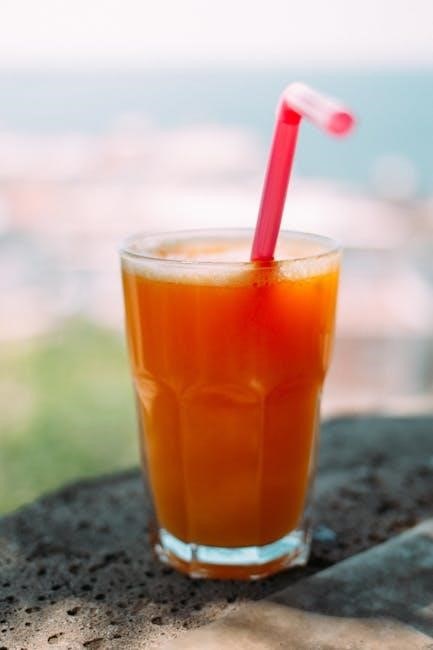
Juicing recipes, even those found in PDF format promising weight loss, often contain surprisingly high levels of natural sugars from fruits. While natural, these sugars still contribute to your daily caloric intake and can hinder weight loss efforts if consumed excessively.
Many PDF guides don’t adequately emphasize the importance of balancing fruit with vegetables to mitigate this issue. Focusing solely on sweet fruits can create a juice that functions more like a sugary drink than a health-promoting beverage.
Always review the ingredients in PDF recipes and consider reducing the amount of fruit or incorporating more leafy greens and vegetables to lower the overall sugar content; Prioritize recipes that emphasize vegetable-to-fruit ratios for optimal health benefits.
Lack of Fiber & Satiety
A significant drawback of most juicing recipes, detailed in numerous PDF guides, is the removal of fiber during the juicing process. Fiber is crucial for promoting satiety, helping you feel fuller for longer and reducing overall calorie intake.
Without fiber, juices are easily digested, leading to a quicker rise in blood sugar and potentially increased cravings. PDF collections often overlook this critical aspect of weight management, focusing primarily on nutrient content.
To combat this, consider blending instead of juicing, which retains the fiber. If juicing, supplement your diet with fiber-rich foods to maintain fullness and support healthy digestion.
Potential Interactions with Medications
Juicing recipes, often found in PDF format, can interact with certain medications. For example, grapefruit juice, a common ingredient in many weight loss blends, is known to interfere with statins and other drugs.
Similarly, the high Vitamin K content in leafy greens like kale and spinach, detailed in PDF guides, can counteract blood thinners like warfarin. Always consult your healthcare provider before starting a juicing regimen.
PDF resources rarely provide comprehensive medication interaction warnings. Prioritize your health by discussing potential risks with a medical professional to ensure safe and effective juicing.
Finding & Utilizing Juicing Recipes in PDF Format
Juicing recipes for weight loss are readily available as PDF downloads from health websites and blogs. These PDFs offer organized collections for easy access.
Utilizing PDFs allows for convenient printing and offline viewing of your favorite blends, enhancing your juicing journey.
Where to Find Reliable Juicing Recipe PDFs
Finding trustworthy juicing recipe PDFs requires careful selection. Reputable health and wellness websites frequently offer free downloadable collections focused on weight loss. Look for sources backed by nutritionists or registered dietitians to ensure recipe accuracy and safety.
Several online platforms specialize in healthy recipes, often providing extensive PDF libraries. Blogs dedicated to juicing and detox diets are also valuable resources, but always cross-reference information. Beware of sites promoting unrealistic claims or lacking credible sources.
Pinterest is a visual search engine where many users share links to PDF recipe collections. However, verify the origin of the PDF before using it. Consider purchasing PDF recipe books from established authors for a more curated and reliable experience.
Benefits of Using PDF Recipe Collections
PDF recipe collections offer unparalleled convenience for juicing enthusiasts; They allow offline access to recipes, eliminating the need for constant internet connectivity while in the kitchen. PDFs are easily printable, creating a tangible resource free from digital distractions.
These collections often categorize recipes by health goal – specifically, weight loss – making it simple to find suitable blends. Many PDFs include nutritional information per serving, aiding in calorie tracking and dietary planning.
Furthermore, PDFs are easily shareable with friends and family, promoting healthy habits within your network. They provide a consolidated resource, streamlining the juicing process and encouraging consistent use.
Tips for Printing & Organizing Juicing PDFs
Printing juicing PDF recipes efficiently requires careful consideration. Opt for double-sided printing to conserve paper and reduce bulk. Consider using cardstock for frequently used recipes, enhancing durability. Organize printed PDFs in binders with dividers categorized by juice type – green, fruit, vegetable – for quick access.
Digital organization is equally important. Create dedicated folders on your computer or cloud storage for weight loss juicing PDFs. Utilize descriptive file names for easy searching.
Consider tagging recipes based on ingredients or benefits. Regularly back up your digital collection to prevent data loss, ensuring your favorite blends are always accessible.
Advanced Juicing Techniques
PDF recipe collections often inspire experimentation! Explore wheatgrass shots and cold-pressed methods for maximum nutrient extraction, boosting weight loss efforts.
Juice fasting, detailed in some PDFs, requires caution and preparation; prioritize safety and consult a healthcare professional beforehand.
Wheatgrass & Spirulina Shots
Wheatgrass and spirulina shots, often featured in advanced juicing PDF guides, represent a concentrated boost of nutrients. These aren’t traditional juices, but potent additions to a weight loss regimen. PDF recipes emphasize their chlorophyll content, believed to aid detoxification and metabolism.
Spirulina, a blue-green algae, is packed with protein and antioxidants, potentially curbing cravings. PDFs often suggest small, regular shots rather than large quantities. Combining wheatgrass and spirulina can create a synergistic effect, enhancing their individual benefits. Always source high-quality, reputable brands when following PDF instructions.
Remember to start slowly, as these shots have a strong flavor and can cause digestive upset in some individuals.
Cold-Pressed vs. Centrifugal Juicers
Juicing PDF resources frequently discuss the debate between cold-pressed and centrifugal juicers. Centrifugal juicers are faster and more affordable, but generate heat and oxidation, potentially diminishing nutrient content. PDF guides often recommend cold-pressed juicers for optimal results, especially when following weight loss recipes.
Cold-pressed juicers, or masticating juicers, extract juice slowly, preserving enzymes and vitamins. While pricier, they yield higher-quality juice, maximizing the benefits of ingredients detailed in PDF recipes.
Many PDFs highlight that nutrient density is crucial for weight loss, making the investment in a cold-pressed juicer worthwhile.
Juice Fasting (Proceed with Caution)
Juicing recipes for weight loss PDFs sometimes mention juice fasting, a more extreme approach. However, these resources consistently emphasize caution. Prolonged juice-only diets can lead to nutrient deficiencies and muscle loss, despite initial weight reduction. PDF guides stress that juice fasting isn’t a sustainable long-term solution.
Instead, PDFs advocate for incorporating juice as part of a balanced diet, utilizing recipes for meal replacements occasionally, not exclusively. Always consult a healthcare professional before attempting a juice fast, as it may interact with medications.
Responsible PDF content prioritizes health and safety over rapid weight loss.